
That wobbly latch on your chain link fence is more than just an annoyance. It’s a genuine weak spot in your property’s security. You can have the sturdiest fence around, but its entire effectiveness really comes down to that one small but crucial piece of hardware: the gate latches chain link you choose.
Why Your Chain Link Gate Latch Matters
We’ve all seen it—a chain link gate that just won't stay closed. It’s a common frustration, but it's also a serious security risk. Whether you’re trying to keep a dog safely in the yard, secure a pool area, or protect your business, the latch is the part that does the real work day in and day out.
It’s the one piece of hardware you touch every time you come and go, so when it fails, the consequences are immediate.
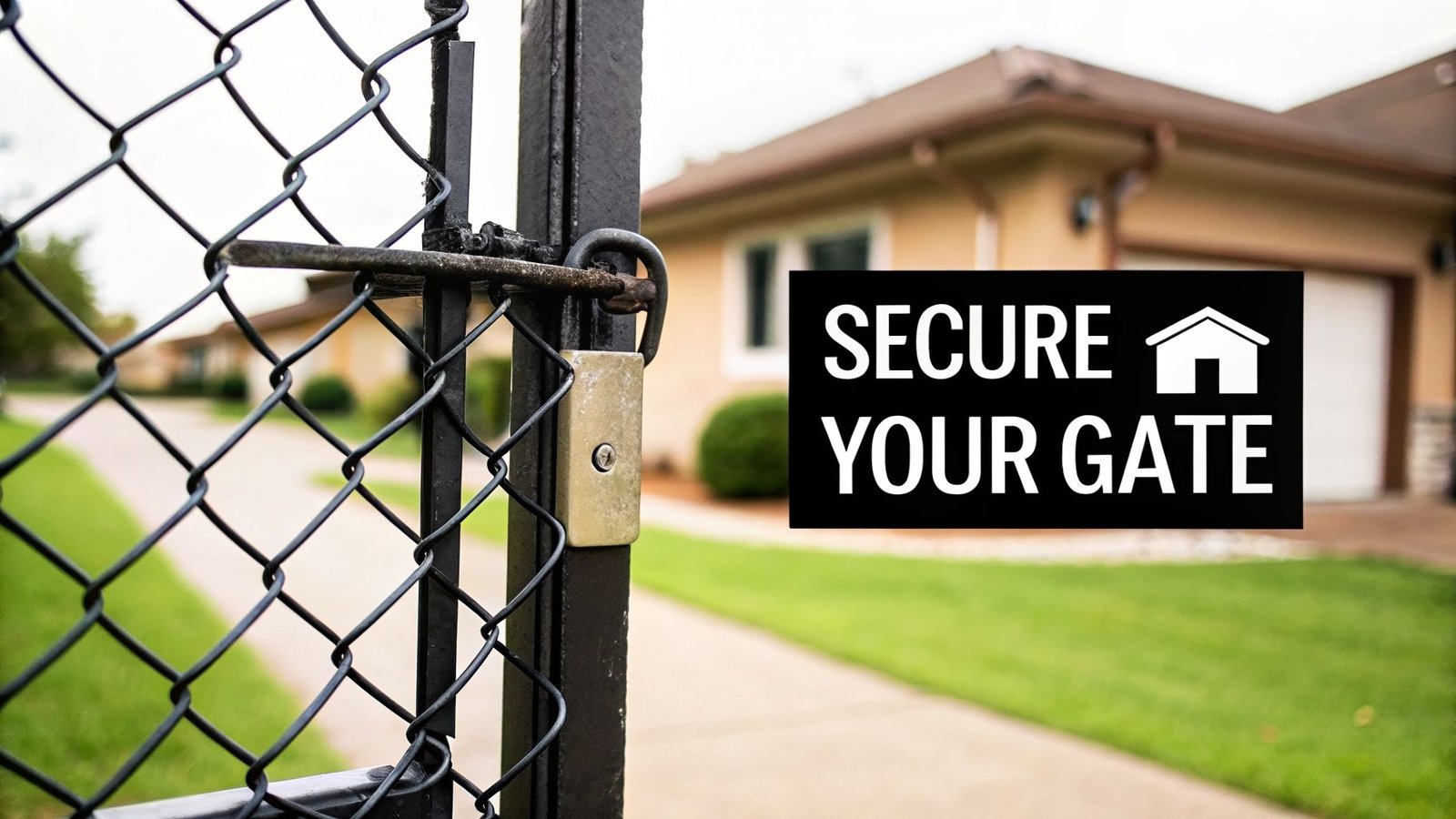
Here at Xtreme eDeals Inc., we’ve helped countless people find the right hardware for the job. We know a gate latch isn't just a simple metal clasp; it's what ensures your fence is actually doing what you bought it for.
Security, Durability, and Peace of Mind
Chain link has been a North American go-to for residential and commercial security for good reason. For over a century, people have relied on its durability and cost-effectiveness. In our experience, pros and DIYers across Ontario love our latches because they’re straightforward to install, often cutting setup time by 40% per project.
Choosing the right latch is an investment in long-term reliability. A quality latch holds up against constant use and harsh Canadian weather, which helps prevent the sagging and misalignment that eventually causes most gates to fail.
It also helps to think about how your gate fits into a larger security picture. For those interested in more advanced setups, learning about modern, automated gated entry systems can provide a broader perspective on 24/7 property protection.
For any homeowner tackling a weekend project or a seasoned contractor out on a job, picking the right hardware is always the first step. This guide will walk you through finding the perfect latch from our collection of fence and gate hardware, so you can be confident your gate will operate smoothly for years.
How to Choose the Right Latch for Your Gate
Picking the right latch for your chain link gate can feel like searching for a needle in a hardware-aisle haystack. But it doesn’t have to be complicated. The secret is to stop thinking about the latch itself and start thinking about your gate’s job.
Is it a simple backyard gate to keep the dog in? Or is it a high-traffic entry point for a commercial property? How you answer that question will point you directly to the right piece of hardware.
Matching Latch Type to Gate Use
For the vast majority of residential fences, a standard fork latch is your workhorse. You’ve seen them a million times. A simple fork-shaped bar slides over the gate post and secures the gate frame, often with a satisfying clank. They're simple, strong, and incredibly effective for keeping kids and pets safely where they belong.
But what if your gate needs to swing both inwards and outwards? That’s where a butterfly latch comes in. Also known as a two-way latch, its "wings" let you open the gate from either side, which is perfect for garden paths or any walkway where you're likely to be carrying things through.
Pro Tip: If your gate encloses a pool or just needs to close securely behind you every time, a self-latching or magnetic latch isn't just a nice-to-have—it's often a requirement. These are specifically designed to catch and lock as the gate swings shut, giving you critical peace of mind.
Now, let's compare some of the most common options you'll find. This table breaks down their best uses and security levels to help you narrow down your choice.
Chain Link Gate Latch Comparison
| Latch Type | Best For | Security Level | Example Product (Xtreme eDeals) |
|---|---|---|---|
| Fork Latch | General residential use, yard and garden gates. | Medium (Padlockable) | Black Fork Latch & Collar |
| Butterfly Latch | Two-way swing gates, high-traffic walkways. | Low (Convenience) | Galvanized Butterfly Flip Latch |
| Self-Latching Latch | Pool gates, child safety areas, automatic closure. | High (Often key-lockable) | Nuvo Iron Magnetic Gate Latch |
| Strong Arm Latch | Commercial properties, high-security areas. | High (Heavy-duty, padlockable) | Galvanized Strong Arm Latch |
As you can see, the right choice really comes down to the gate's specific purpose. A simple fork latch is great for most homes, but for added safety or specific functions, it's worth looking at more specialized options.
Material and Finish: The Climate Connection
Your local climate is one of the biggest factors in how long your latch will last. A latch in a dry, mild region has it easy compared to one facing down coastal salt spray or the freeze-thaw cycles of a harsh Canadian winter. This is where your material choice really matters.
- Galvanized Steel: This is the industry standard for a reason. A protective zinc coating is applied to the steel, giving it a powerful defence against rust. It's a durable and budget-friendly choice that holds up well in most climates.
- Powder-Coated Finishes: For another layer of protection and a cleaner look, a powder-coated latch is the way to go. Our trusted suppliers, like Nuvo Iron and Decorex Hardware, offer finishes that not only fight rust but also resist scratches and fading from years of sun exposure.
Making the right choice upfront saves you a lot of headaches later. For example, in California, the right chain link gate latches are a big deal, making up 61% of hardware sales because they have to endure everything from desert heat to coastal fog. Investing in quality materials, like the ones from Decorex we carry, often comes with 10-year warranties that can slash replacement costs by 55% compared to cheaper alternatives that might fail in just a couple of seasons.
Of course, the latch is just one part of the bigger picture. If you're tackling a full fence project from scratch, getting the fundamentals right is key. You can get a solid overview in our guide on how to install a chain link fence.
At Xtreme eDeals, we make sure to stock a wide array of options from brands we trust. Whether you need a heavy-duty latch for a 1-7/8” commercial gate frame or a simple, reliable one for your backyard, we've got you covered. When you choose with confidence, you get secure, dependable performance that lasts.
Installing Your New Gate Latch
Alright, you've picked out the perfect latch. Now for the satisfying part: the installation. Putting a new fork latch on a chain link gate is one of those quick DIY jobs that makes a huge difference. This isn't just about slapping on some hardware; it's about getting a gate that closes smoothly and securely, day in and day out.
A little prep goes a long way. Getting your tools together first means you won't be running back to the shed halfway through the job. You don't need a pro's toolkit for this—just a few key items.
Gathering Your Tools and Hardware
For a standard fork latch install, you'll be able to get by with some basic hand tools. Having everything you need laid out makes the whole process faster and safer.
- Wrench or Ratchet Set: A 9/16" wrench or socket is what you'll need most of the time. This fits the carriage bolts that come with almost every standard fork latch.
- Tape Measure: Absolutely crucial for getting the latch at a comfortable height so you're not fumbling with it later.
- Level: Grab a small torpedo level. It’s the best way to see if your gate is hanging true before you even start.
- Safety Gear: Don't skip this. A good pair of gloves will save your hands from sharp edges, and safety glasses are a must.
This simple process flow helps visualize the key decisions you've already made to get to this point.
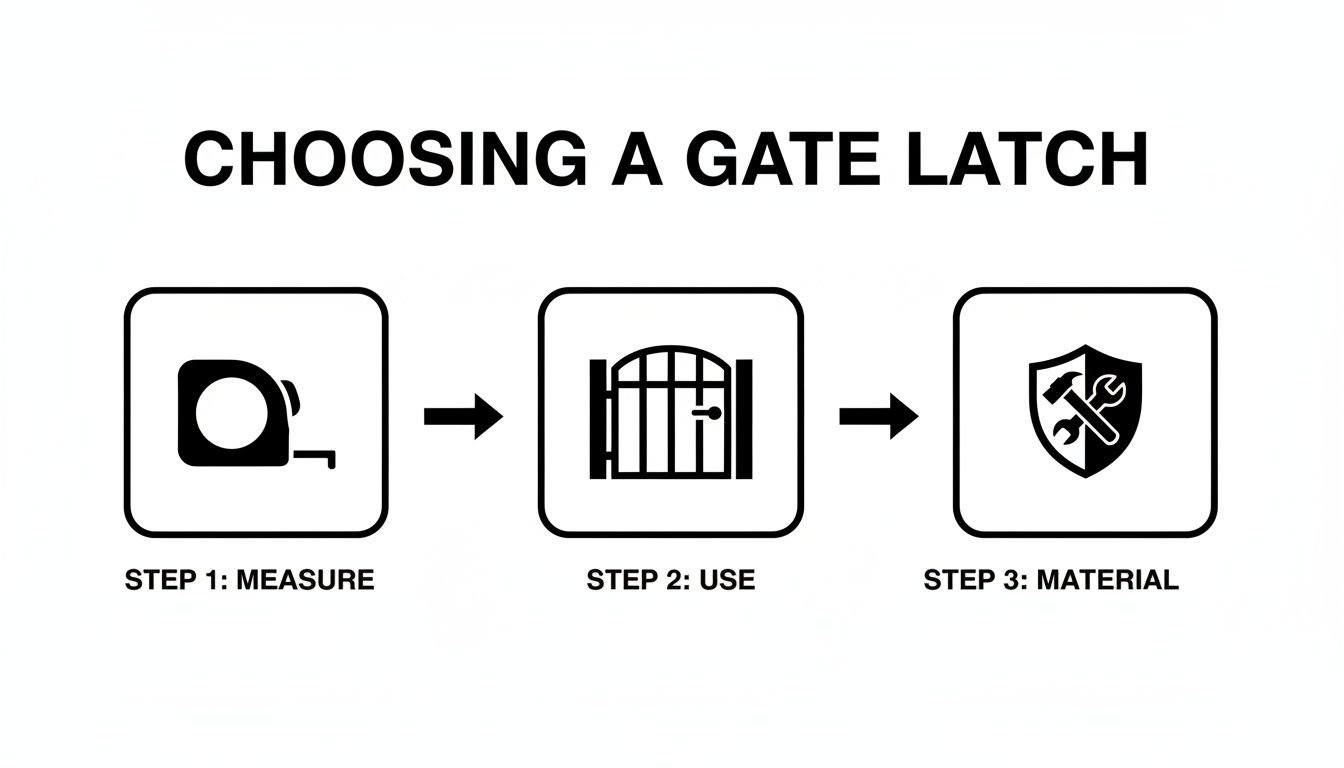
This visual guide simplifies the selection process down to three core considerations: measuring your gate, defining its use, and choosing the right material for your climate.
Prepping the Gate and Post
Before you bolt anything on, take a second to check the gate itself. Swing it shut and hold it right where you want it to latch. Now, put your level on the top rail. Is it hanging straight? If the gate is sagging, you really should fix the hinges first. Attaching a new latch to a crooked gate is just a band-aid solution.
Next, figure out where you want the latch. A good spot is usually somewhere between your waist and chest—wherever feels natural to reach. Use a pencil or a small piece of tape to mark the location on the gate post.
Pro Tip: Don't stress if your gate has a slight sag you can't fix right away. Most fork latches are forgiving. You can often compensate by installing the latch fork a little higher on the post. This lets the gate lift up slightly as it closes, settling perfectly into the latch.
While you’re at it, give the post and gate frame a quick wipe-down where the hardware will go. Clearing away any dirt or grime ensures the latch will sit flush and tight. For bigger jobs that need more than just a simple latch, you can explore our complete lineup of fasteners and fittings to find the right hardware for any challenge.
Attaching and Aligning the Latch
Time for the main event. Your typical fork latch has two parts: the U-shaped latch fork for the post, and the collar that wraps around the gate frame.
Start by positioning the fork piece on your fence post right where you made your mark. Make sure the open "fork" is pointing up and angled a bit toward the gate. Thread the nuts on the bolts but leave them loose enough for adjustments.
Now, swing the gate closed again. Slide the collar onto the gate frame so it lines up and drops right into the fork. This collar is what actually holds the gate shut.
With the gate closed and the collar sitting in the fork, check the fit. You want it to be snug, but not so tight that you have to slam it. The gate should close with a firm, confident push. Once you're happy with how it lines up, go ahead and tighten down the bolts on both the fork and the collar.
The goal is a secure closure without any lifting, wiggling, or fighting with the gate. A well-installed latch should work like a dream from day one, giving you that reliable security you're looking for.
Troubleshooting Common Gate Latch Problems
Even the best gate latch will start acting up eventually. It's just the nature of outdoor hardware. Maybe your chain link gate is suddenly a pain to close, pops open on its own, or is showing the first signs of rust. It’s frustrating, but the good news is that you can likely fix it yourself in minutes.
Before you grab your wallet and head out for a replacement, it's worth playing detective. More often than not, a "latch problem" is actually a symptom of something else, like a post that's shifted over winter or a gate that's starting to sag. Let's figure out what's really going on.
Troubleshooting a Misaligned Latch
Misalignment is, without a doubt, the most common issue we see. If you find yourself having to lift, shove, or jiggle the gate to get it to click shut, the alignment is definitely off. This usually happens after the ground freezes and thaws, or simply from the gate slowly sagging on its hinges over the years.
Take a moment to swing the gate closed and watch how the latch parts try to meet. Does the fork hit the collar too high or too low? The fix is usually a quick adjustment.
- Grab a wrench and loosen the bolts holding the latch fork, just enough so you can slide it.
- Move the gate into its closed position and line up the latch fork perfectly.
- Once it closes smoothly without any force, tighten those bolts back down securely.
Expert Insight: A gate latch isn't designed to hold up a sagging gate. If you have to keep adjusting the latch, the real culprit is probably worn-out hinges. Fix the hinges first, and your latch problems will disappear for good.
Battling Rust and Corrosion
For any metal hardware left outside, rust is public enemy number one. It can seize up moving parts and weaken the latch until it fails. A little prevention here goes a long way.
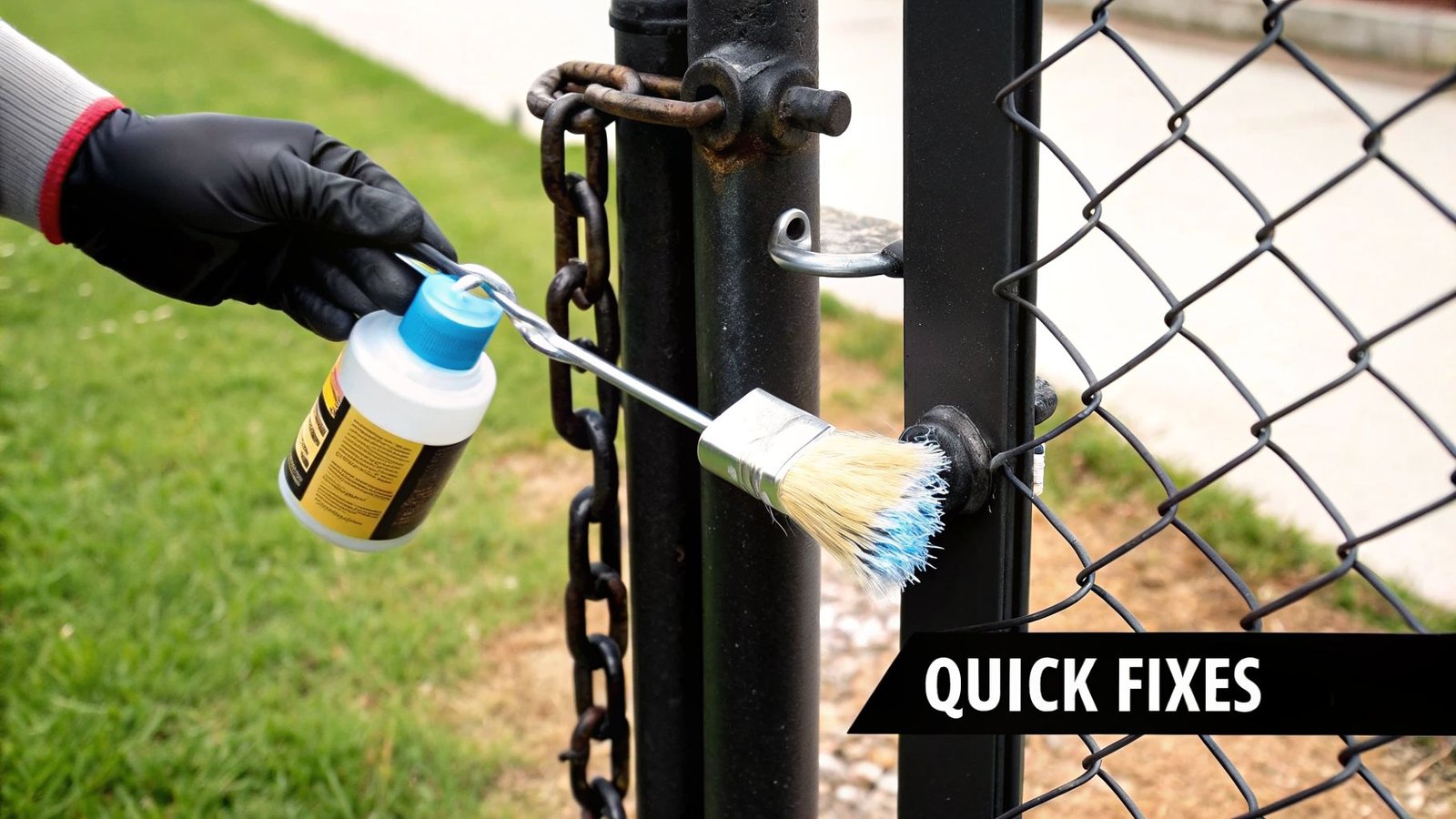
If you already see some minor surface rust, a wire brush will be your best friend. Scrub off the flaky bits, wipe it clean, and hit it with a good rust-inhibiting metal primer and paint. If a part is completely seized, a few squirts of penetrating oil can work miracles, breaking rust's grip and getting things moving again.
To keep rust from ever starting:
- Annual Lubrication: Every spring, give all the moving parts of your latch a shot of silicone-based or lithium grease lubricant. It repels moisture and keeps everything operating smoothly.
- Quick Inspections: A couple of times a year, just give your latch a quick once-over. It’s much easier to touch up a tiny rust spot than to rehab a fully corroded latch.
- Choose Your Hardware Wisely: When it's time for a new latch, go for one with a protective coating. Galvanized steel and powder-coated finishes, like those on the Nuvo Iron latches we carry at Xtreme eDeals, provide a powerful defence against the elements.
A Little Maintenance Goes a Long Way
Thinking ahead pays off. In California, for example, licensed contractors installed over 850,000 chain link gates between 2018 and 2025. When they started favouring corrosion-resistant latches, latch-related service calls plummeted by an impressive 35%.
It's a lesson the fencing industry has known for a long time, going all the way back to when Hohulin Fence pioneered chain link back in 1897. Today, upgrading to modern hardware like our Nuvo Iron fork-and-eye latches—which are tough enough to withstand 150 lbs of pull force—is a smart move for any DIYer looking to make their fence more reliable. Good hardware doesn't just improve security; it also helps the pros reduce their liability.
Upgrading for Better Security and Convenience
Look, a standard fork latch does its one job: it keeps the gate from swinging open. But let's be honest, sometimes "good enough" just isn't. When you need to boost security or just make life a little easier, upgrading your gate latches chain link hardware is one of the smartest moves you can make. It's a small project that delivers a big impact on your peace of mind and daily routine.
The quickest win for security? Making sure your latch is padlock-compatible. It’s the most straightforward upgrade out there. Most basic fork latches, like our Galvanized Fork Latch & Collar, already have a hole designed for a padlock, turning a simple gate into a real deterrent against unwanted entry. It's a minimal-cost, high-reward step toward securing your property.
Boosting Convenience with Smart Latches
For anyone with kids, pets, or a property that needs controlled access, a self-latching mechanism is a total game-changer. These latches are designed to automatically click shut and secure the gate behind you. No more second-guessing if you remembered to close it. In fact, for pool enclosures, this isn't just a convenience—it's often a safety requirement by law.
Imagine letting the dog out or watching the kids play in the yard without ever having to double-check the gate. That's the freedom a self-latching model gives you. Some of the more advanced magnetic latches, like those from Nuvo Iron, give you that automatic security, every single time.
If you're serious about beefing up your gate's security, it can be worth talking to the pros. Consulting with residential locksmith services can open your eyes to heavy-duty options that you might not find at a big-box store. They can help you find a solution that integrates perfectly with your gate.
Solving for Two-Way and Specialty Gates
What happens when you have a gate that needs to swing both in and out? Your standard latch just won't cut it. This is a common situation for high-traffic walkways, and luckily, there’s specialized hardware designed just for this. A two-way or butterfly latch, such as our Galvanized Butterfly Flip Latch, uses a unique "winged" design that allows the gate to open and latch from either direction.
Speaking of upgrades, there are several paths you can take depending on your needs. Here’s a quick breakdown of common latch upgrades and what they offer:
Latch Upgrade Options and Benefits
| Upgrade | Primary Benefit | Ideal For |
|---|---|---|
| Padlock-Compatible Latch | Enhanced Security | Basic residential and commercial properties needing a simple security boost. |
| Self-Latching Mechanism | Convenience & Safety | Families with children/pets, and mandatory for most pool enclosures. |
| Magnetic Latch | Reliable & Quiet Operation | High-end residential gates, pool areas, and where quiet closing is preferred. |
| Two-Way (Butterfly) Latch | Dual-Direction Access | High-traffic walkways or gates that need to open both inwards and outwards. |
| Key-Lockable Latch | Integrated Security | Properties where carrying a separate padlock is inconvenient; provides a cleaner look. |
Choosing the right upgrade really comes down to how you use your gate every day.
At Xtreme eDeals, we make sure to stock these kinds of advanced hardware solutions. From heavy-duty latches that can take a padlock to convenient self-closing models, we have what you need to turn a simple opening in your fence into a secure, high-performance entryway. These small changes really do make a huge difference.
Your Top Gate Latch Questions Answered
Even the most straightforward project can throw you a curveball. When you’re out there with a latch in one hand and a wrench in the other, a quick, clear answer is what you need. We get a lot of questions, so we’ve gathered the most common ones right here to help you get the job done right.
Gate Latches vs. Gate Closers
One of the first things people mix up is the gate latch and the gate closer. They’re two different parts that often work as a team, but they have very different jobs.
- A gate latch is what physically holds your gate shut. Think of it as the lock or clasp that stops the gate from swinging open on its own. Our heavy-duty Black Fork Latch & Collar is a perfect example of this.
- A gate closer, on the other hand, is the mechanism that automatically swings the gate closed after someone passes through. Our Nuvo Iron Self-Closing Gate Hinge Kit is an excellent choice for this function.
For busy entryways or places where security is a must—like around a swimming pool—you really need both. The closer makes sure the gate isn't left open, and a self-latching latch ensures it locks tight every single time.
Can I Put a New Latch on an Old, Rusty Post?
Absolutely. But you can't just slap a new piece of hardware on a rusty post and expect it to last. A little prep work is all it takes to make sure your installation is solid for years to come.
Your new hardware is only as strong as the surface it's mounted on. Taking ten minutes to prep the post ensures your latch stays secure and prevents the old rust from spreading to your new investment.
Grab a wire brush and give the post a good, hard scrub to get rid of any loose rust and flaking paint. Once you're down to the cleaner metal, apply a quality rust converter to neutralize any remaining corrosion. A final coat of metal primer will give your new latch the perfect, stable surface it needs to grip onto.
How Do I Measure for the Right Latch?
Getting the measurements right from the start saves a ton of headaches later. For nearly all chain link fences, the only measurement that really matters is the Outside Diameter (OD) of your gate post and the gate frame itself.
Don't overthink it. Just wrap a flexible tape measure around the round post where the latch will sit. Do the same for the vertical pipe of the gate. A very common size you’ll find in residential fences is a 1-7/8" post. Most gate latches for chain link, like our 1-5/8" to 2-7/8" models, are designed to fit these standard dimensions. Just check your post and gate frame OD against the latch specs on our product page, and you’ll get a perfect fit.
At XTREME EDEALS INC., we stock a huge selection of tough, reliable gate hardware to help you finish your project with confidence. Find the perfect latch for your fence by exploring our collection at https://caxtremeedeals.mdshaheimran.me.


Leave a comment
You must be logged in to post a comment.